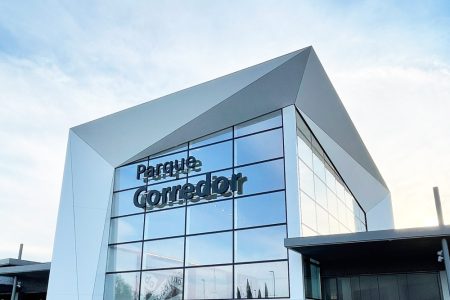
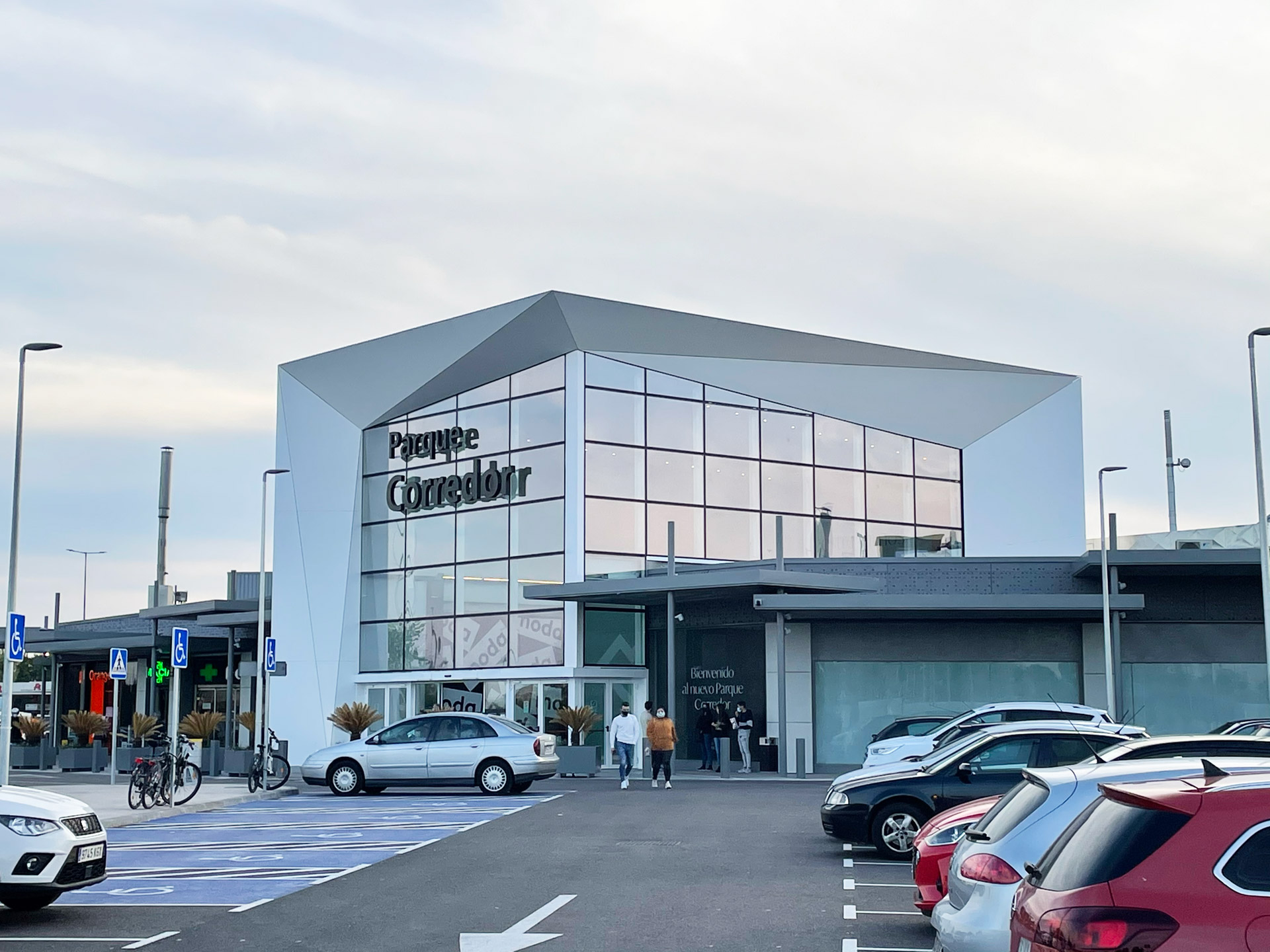
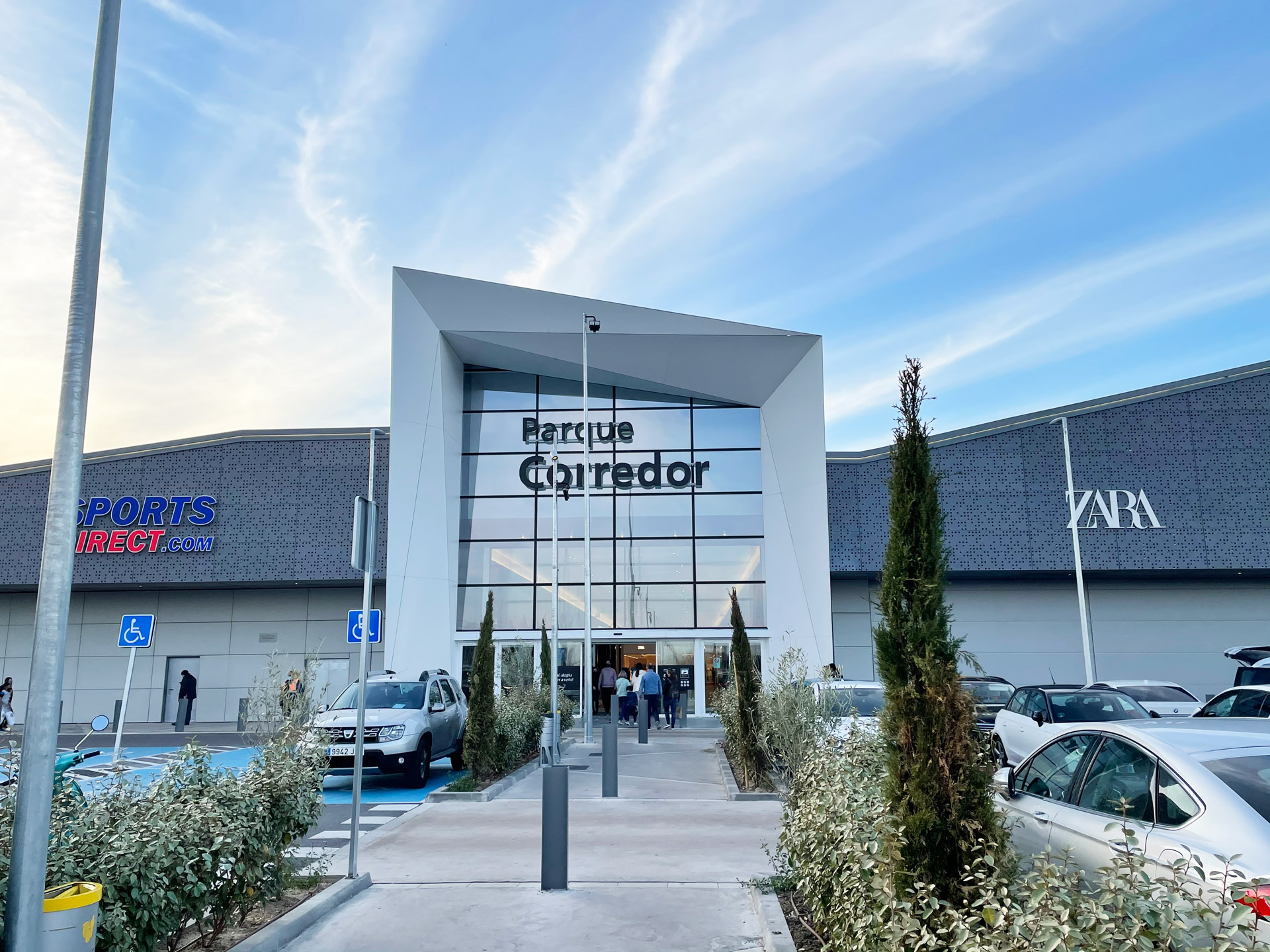
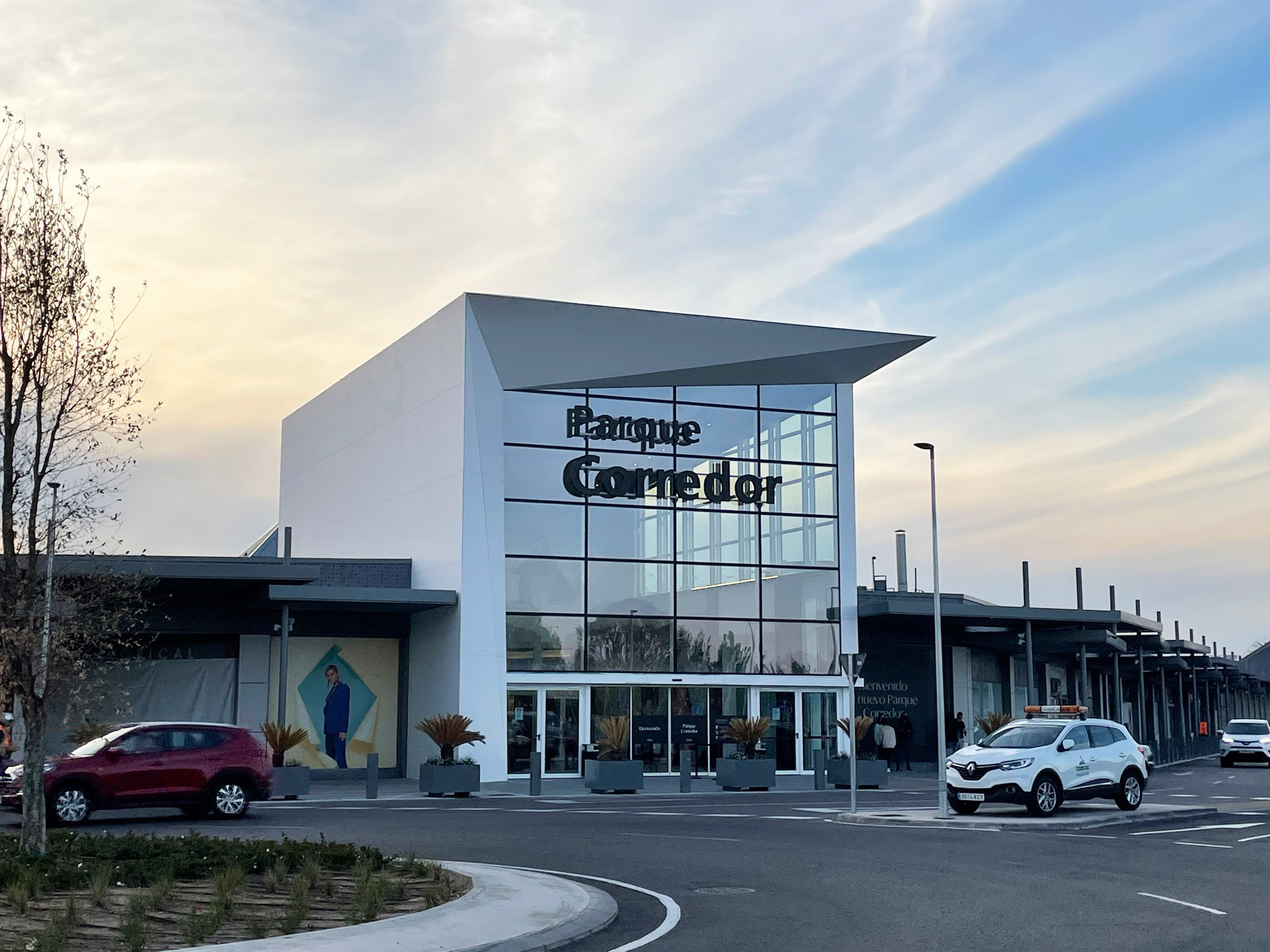
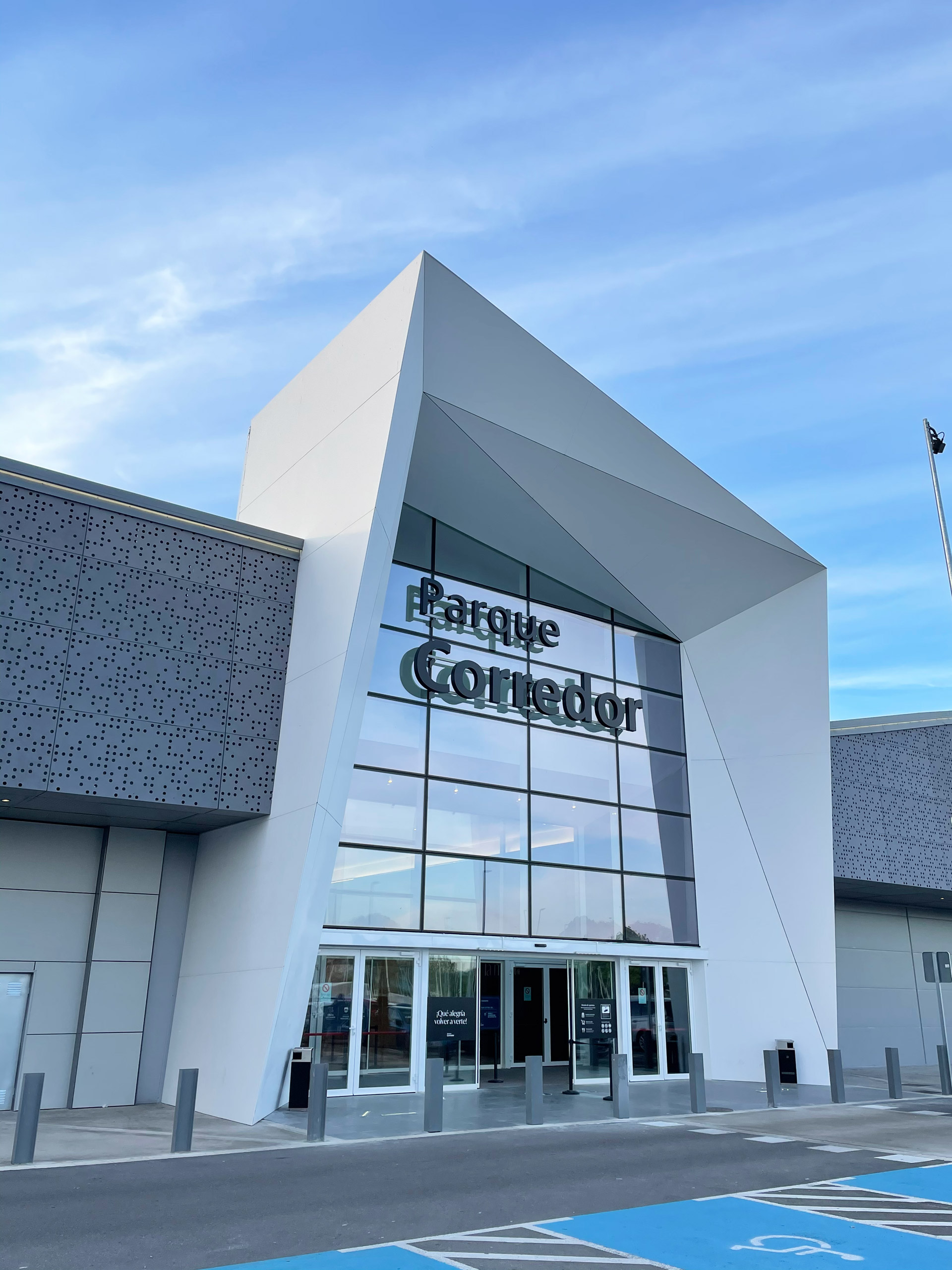
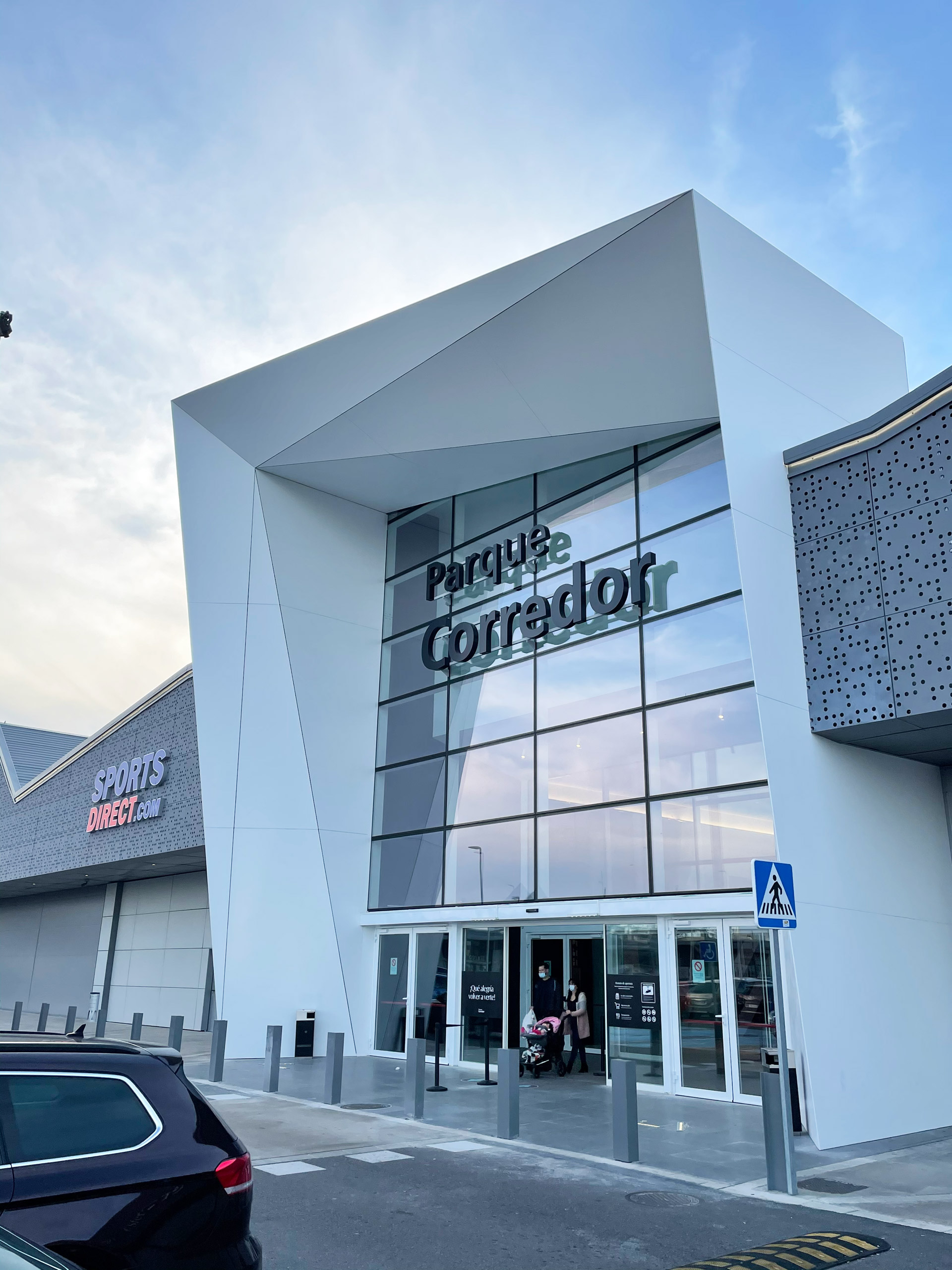
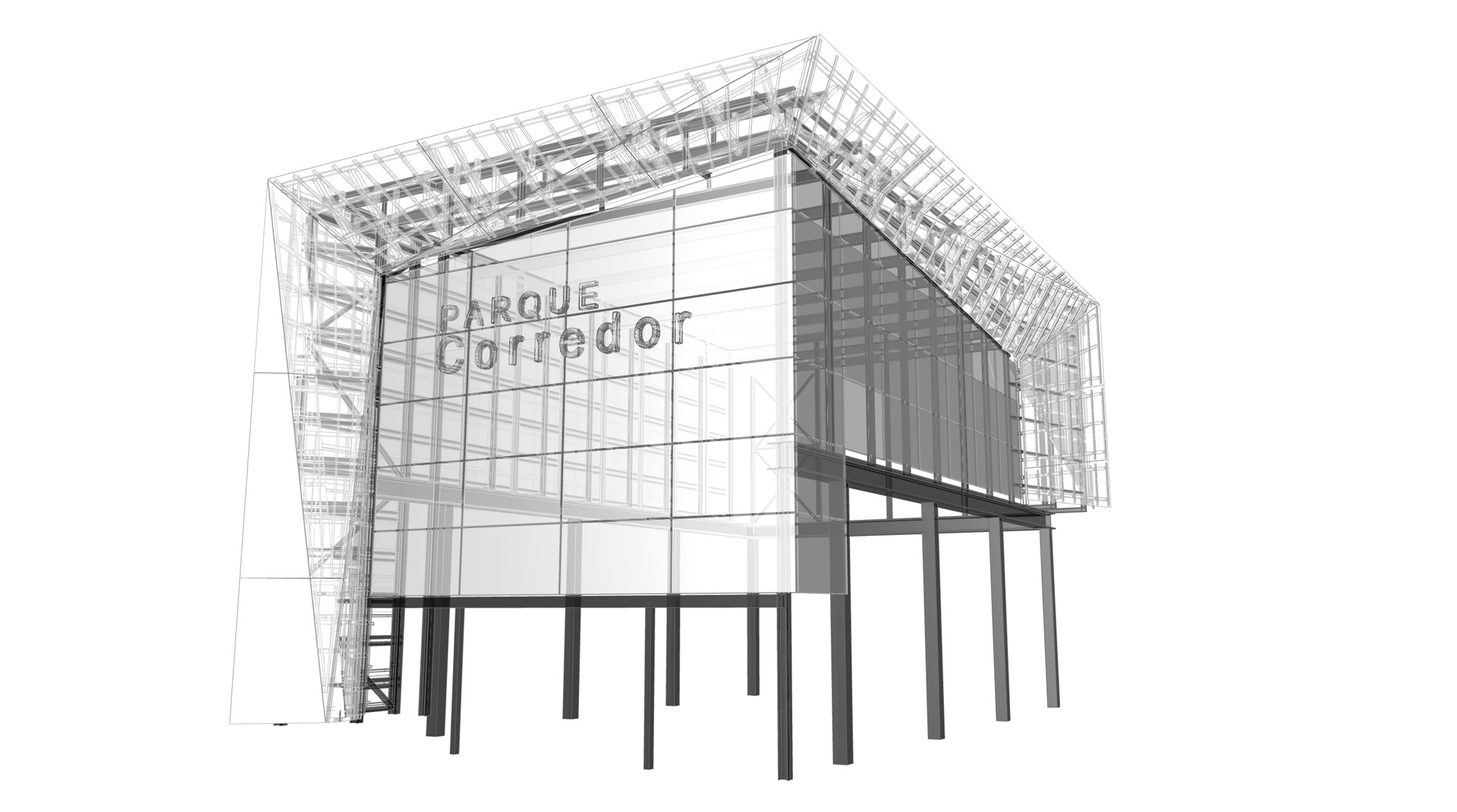
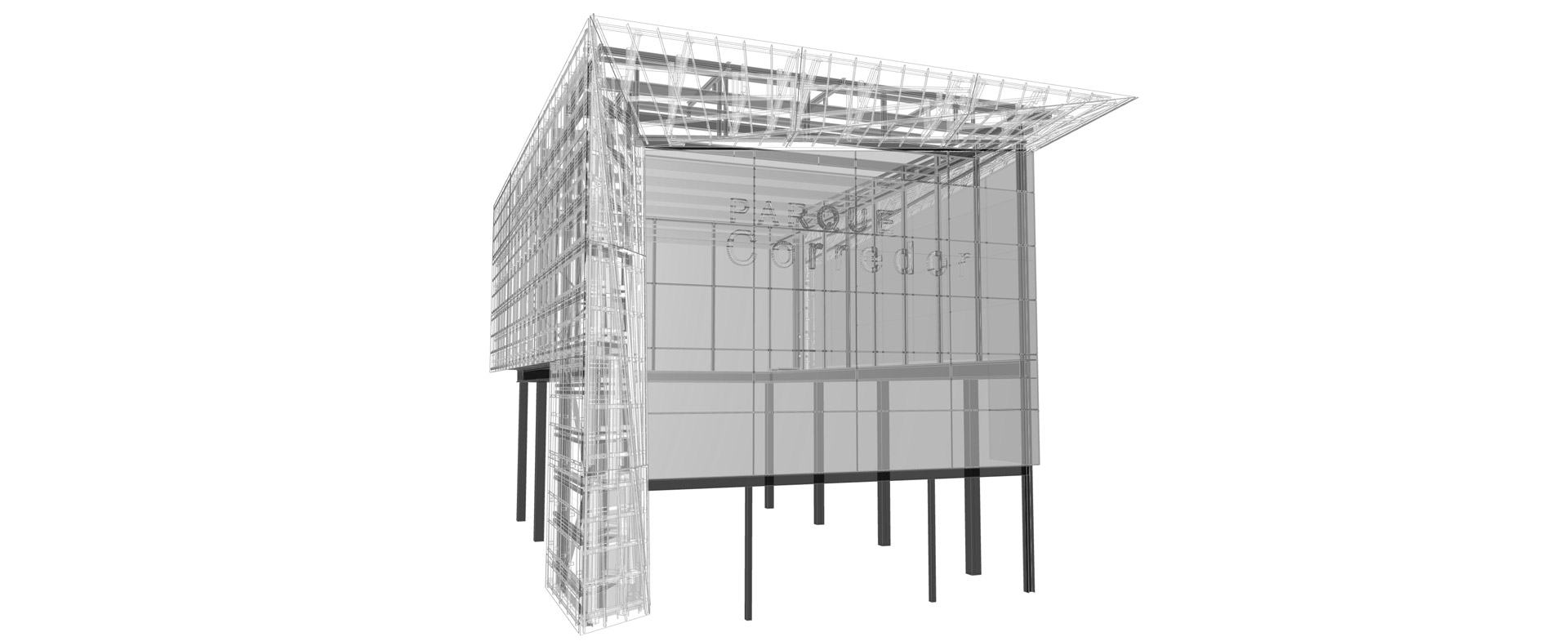
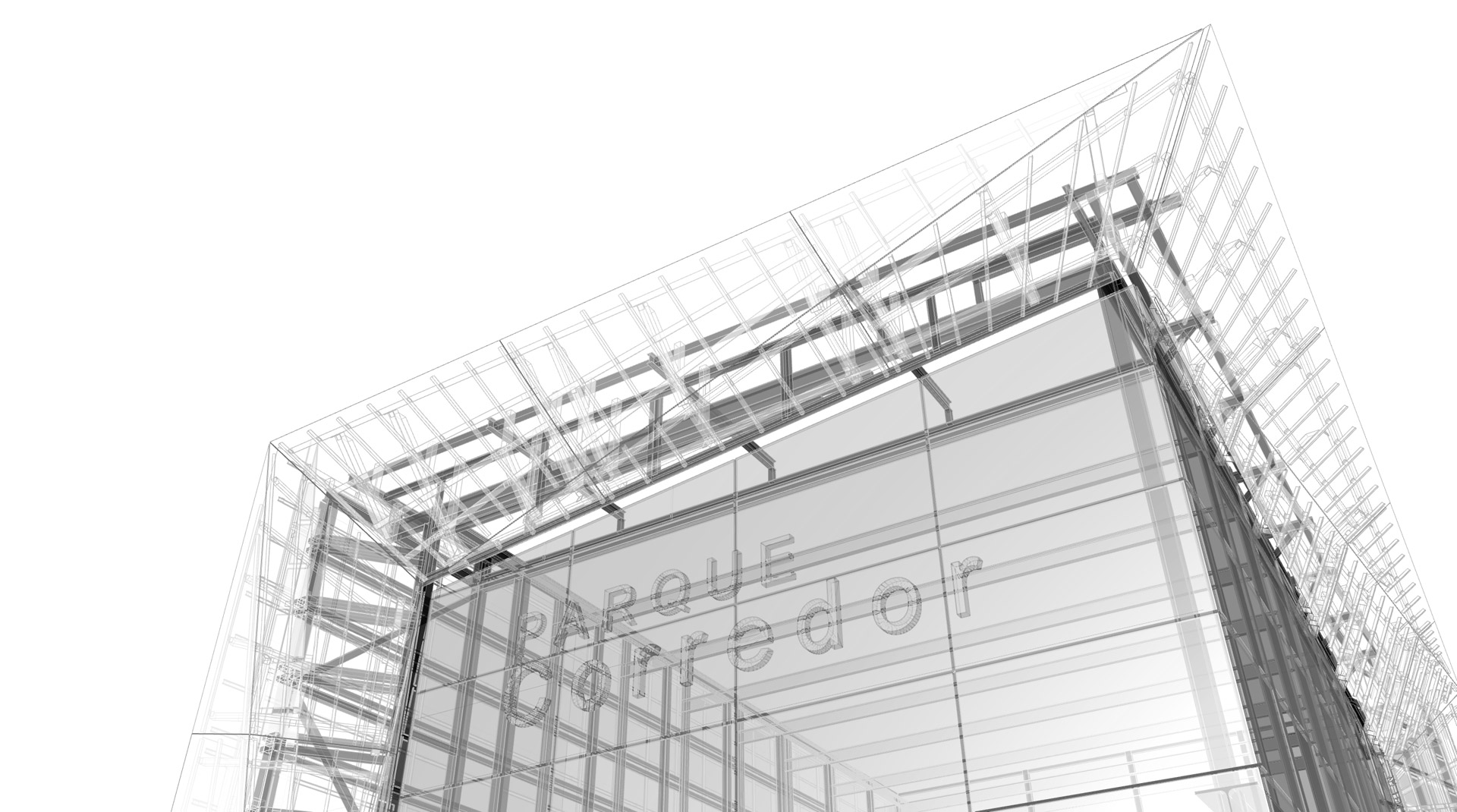
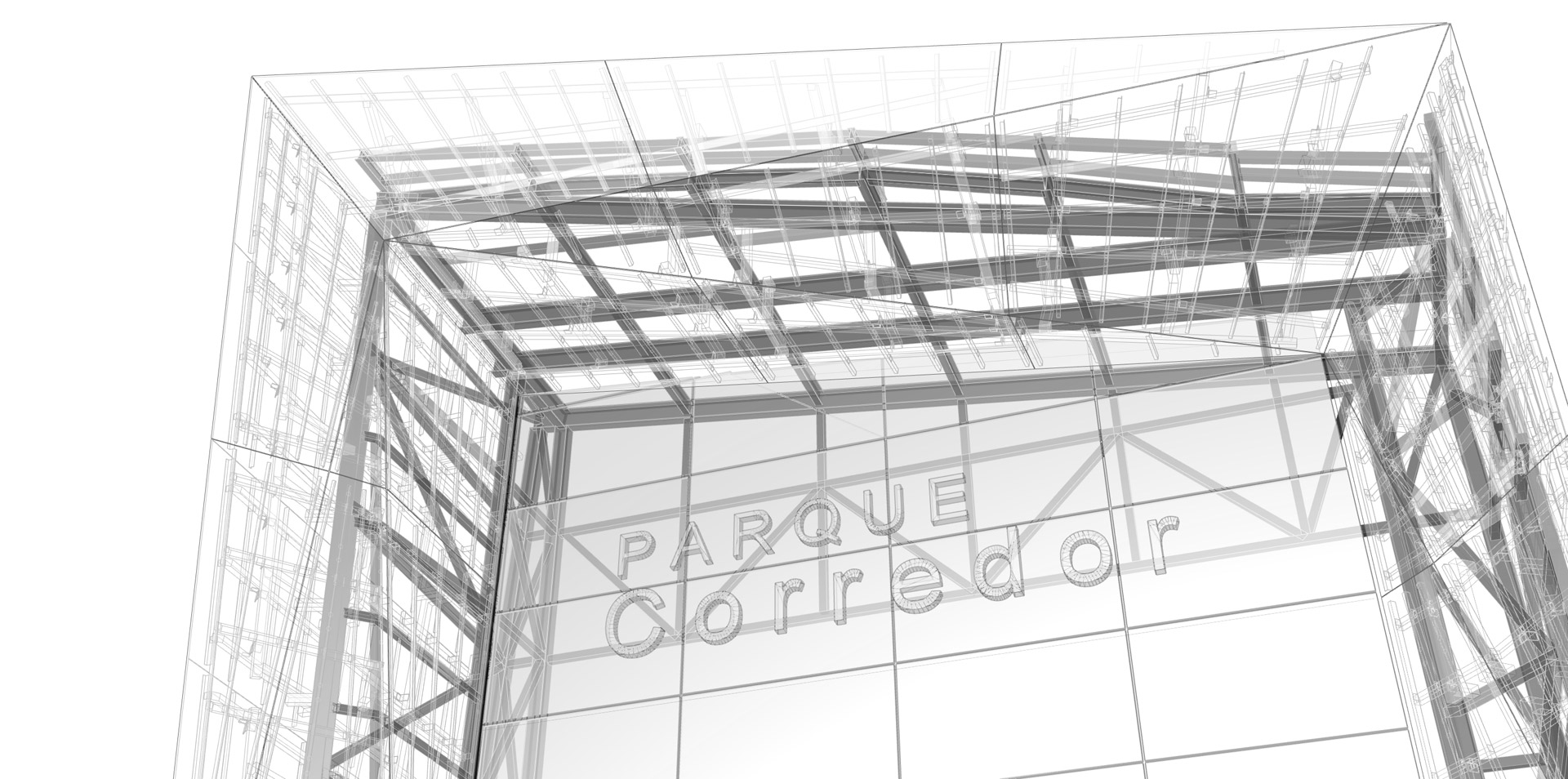
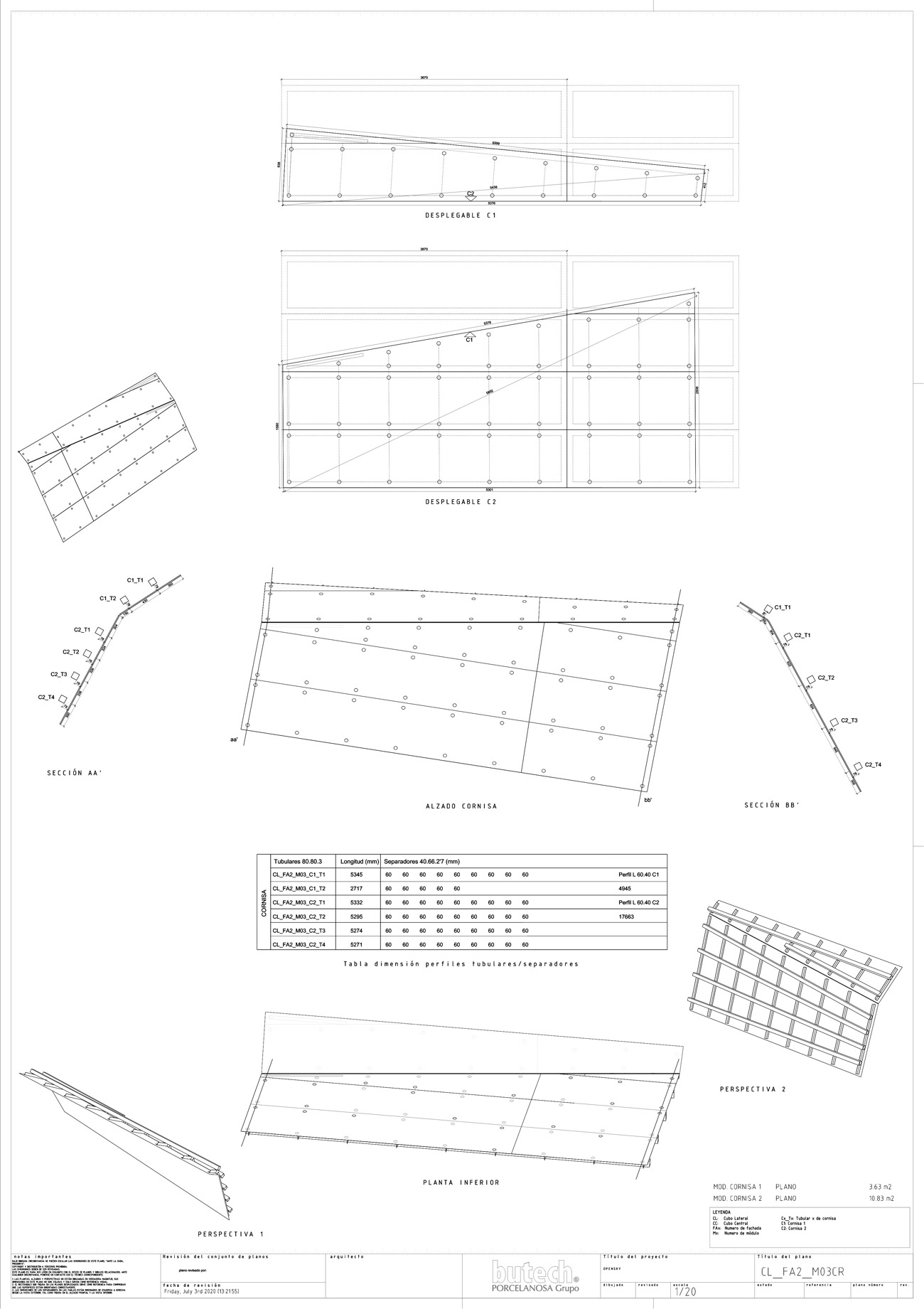
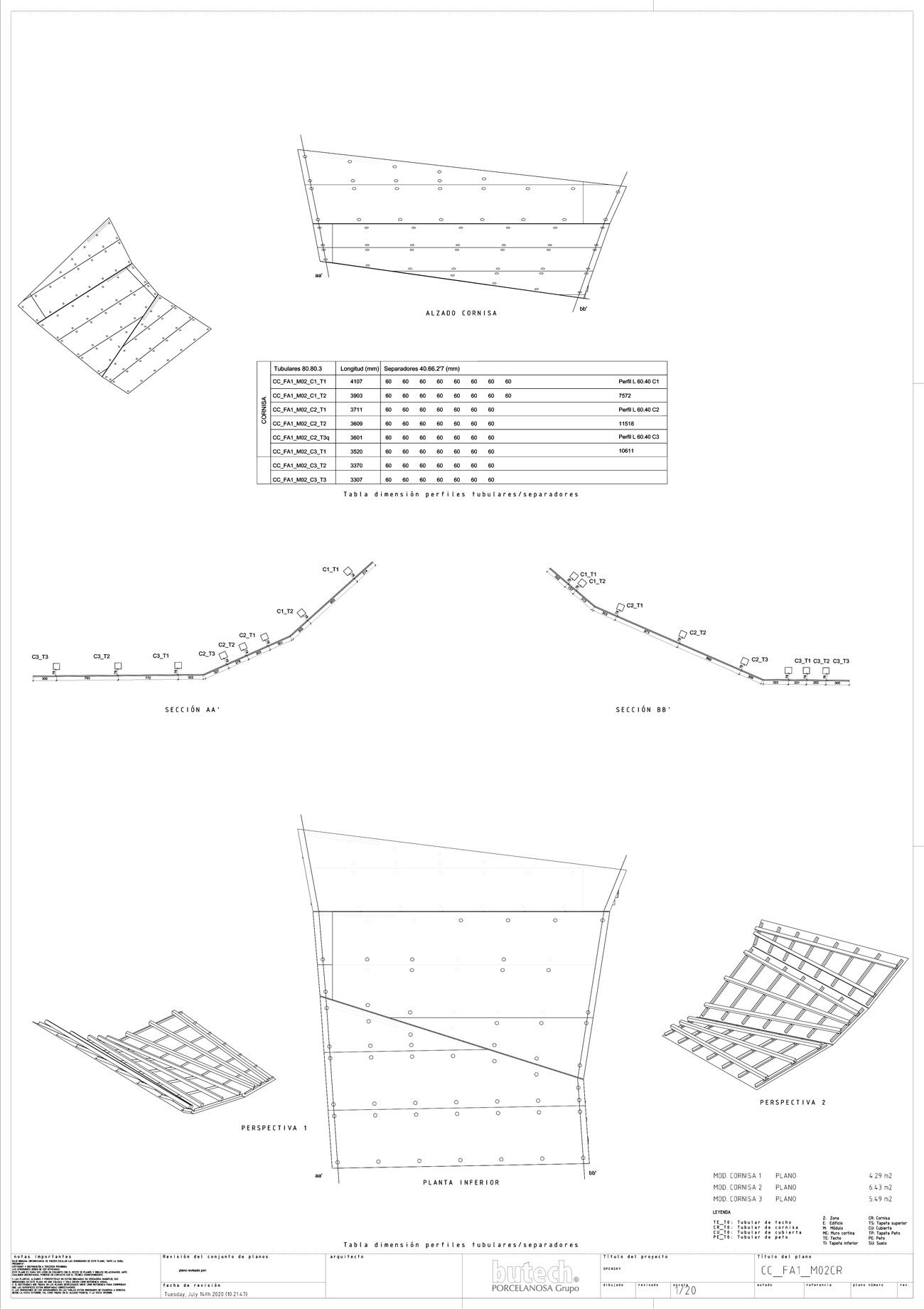
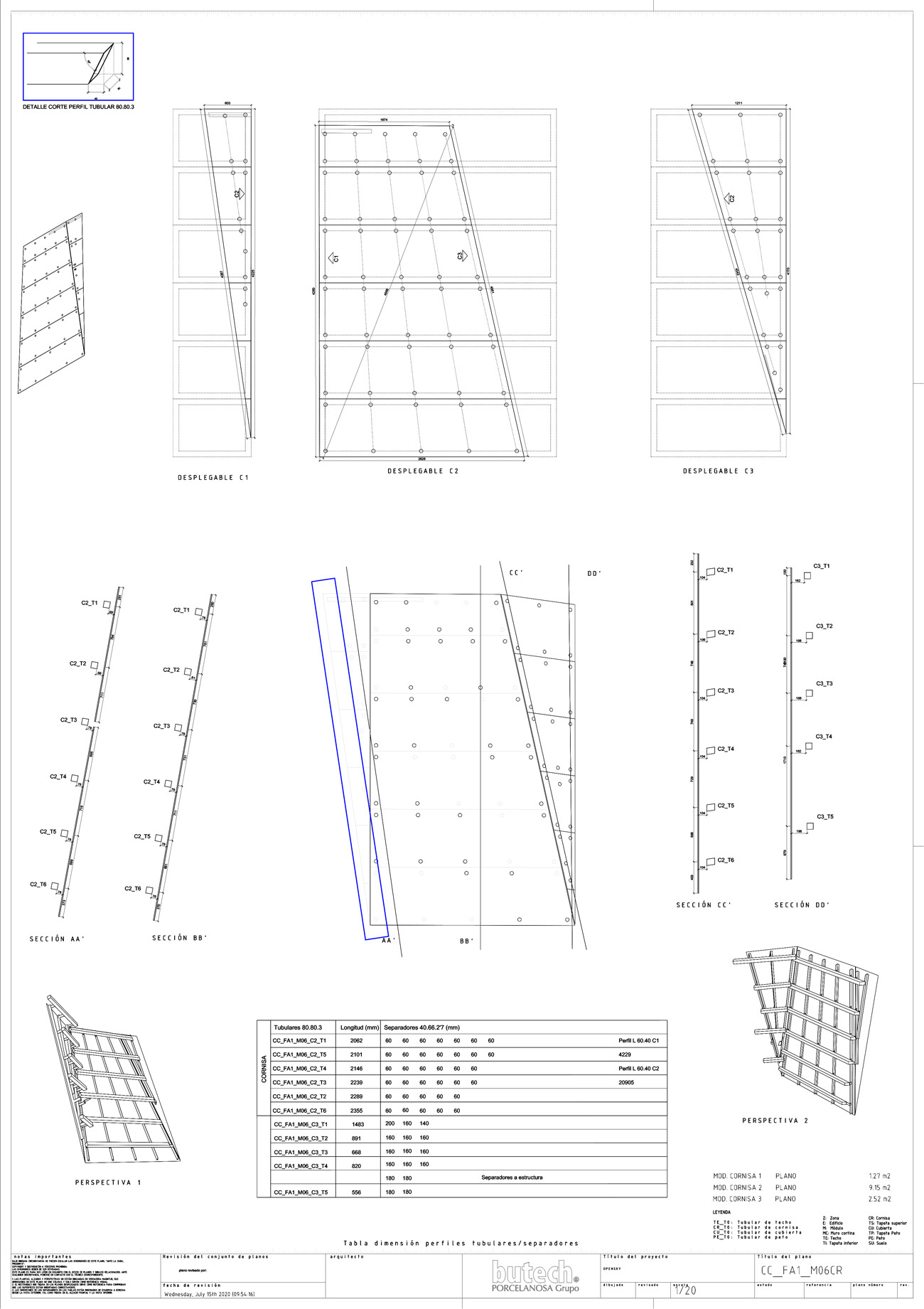
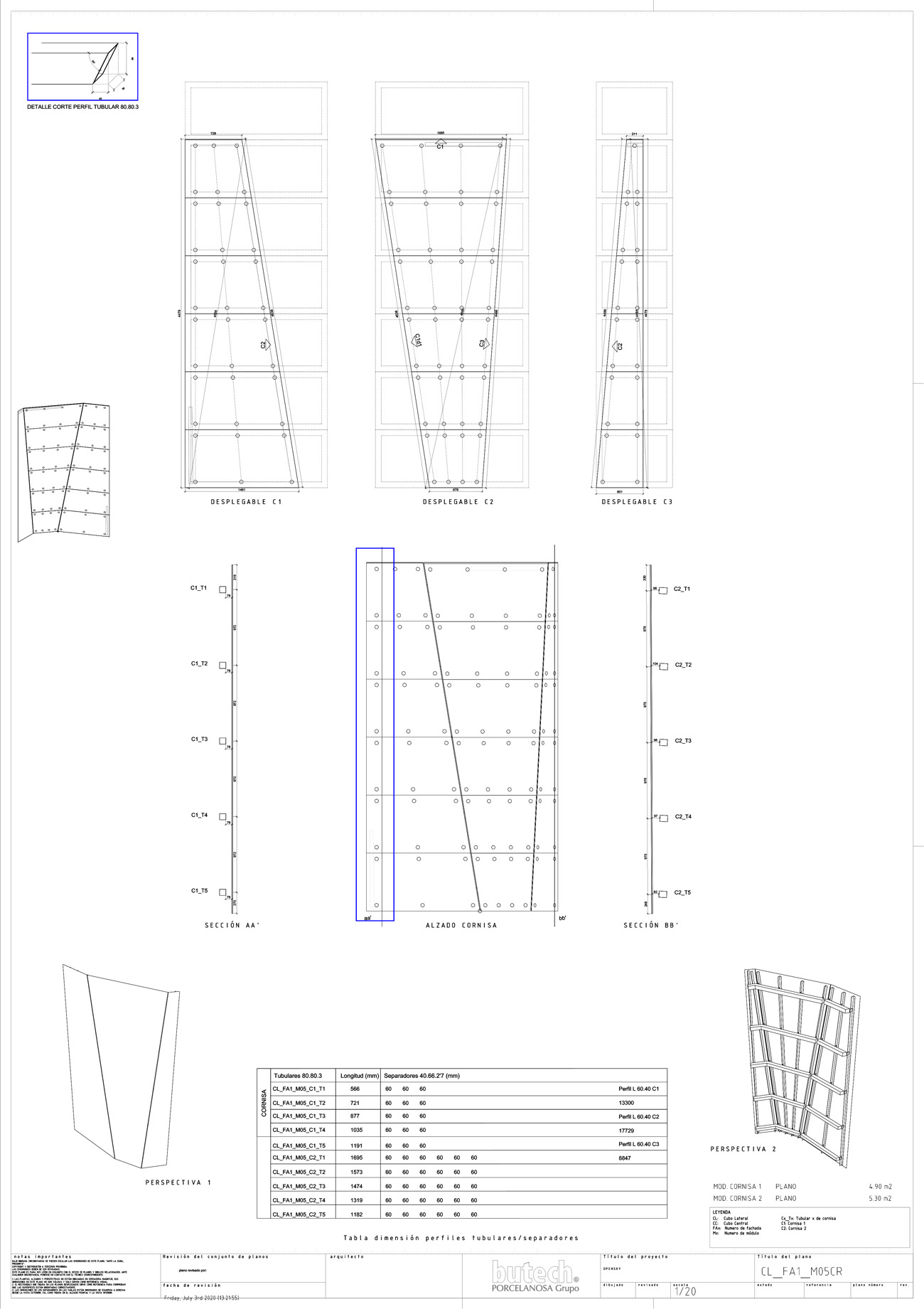
The façade intervention at Parque Corredor Shopping Centre is defined through a set of 135 Krion panels integrated into the project’s façade geometry, forming an architectural layer that responds to the scale, alignment, and functional conditions of the building. The façade design balances aesthetic coherence and construction efficiency while contributing to the overall visual identity of the retail environment.
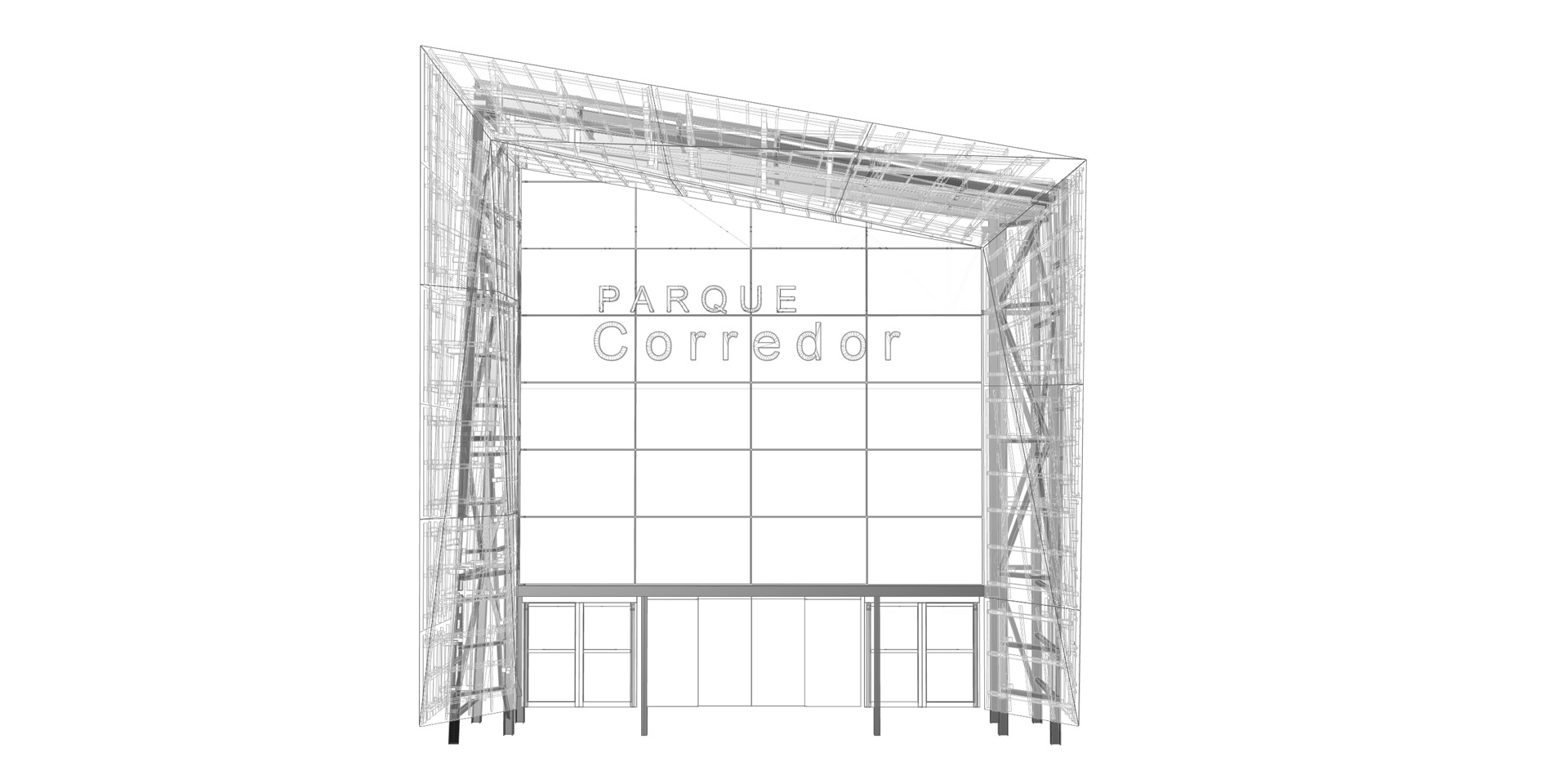
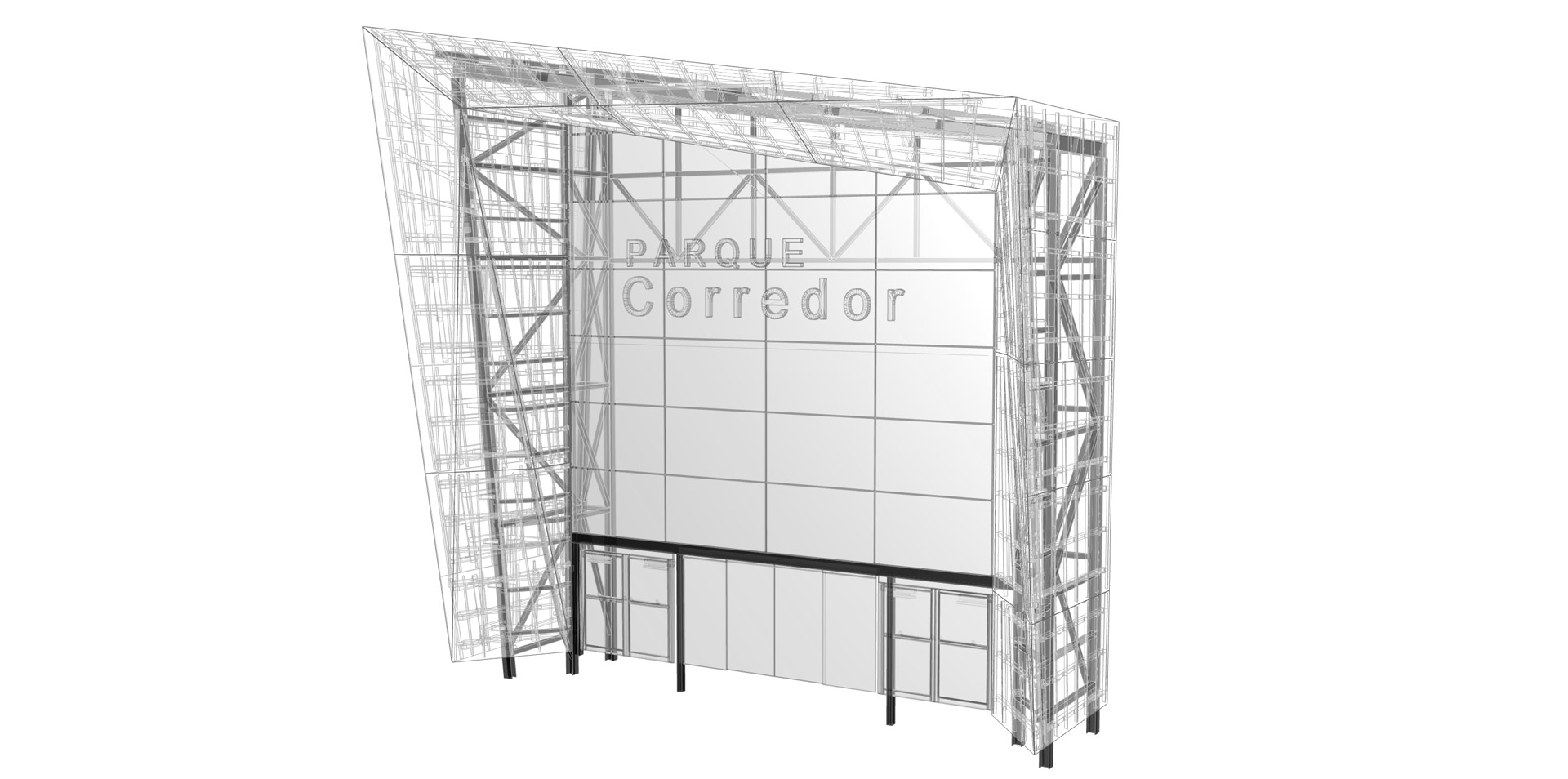
The panels are developed using algorithmic workflows that establishes geometric definition and fabrication constraints, enabling precise control over tolerances and assembly conditions. Substructures and auxiliary fixing elements are coordinated within a federated model, ensuring dimensional consistency, reducing on-site adjustments, and supporting a reliable installation process. This methodology establishes a direct relationship between the digital model and construction execution, facilitating coordination across design, manufacturing, and site assembly.
Additionally, the following tasks were developed:
Coordination of multiple 3D models (structural, façade, and auxiliary systems), including clash detection, issue tracking, and technical coordination with third-party suppliers.
Redefinition, optimisation, and rationalisation of the original geometry to enable an industrialised and fabrication-aware manufacturing process for the façade system.
Design and detailing of the auxiliary structural system supporting the Krion modules and their assembly logic.
Preparation of shop drawings for the manufacturing and assembly of the façade modules using 1 cm Krion panels.
Bill of quantities for each module, including surface areas, joints, fasteners, welding lengths, and associated fabrication metrics.